Private CCR training
Build discipline into every detail.
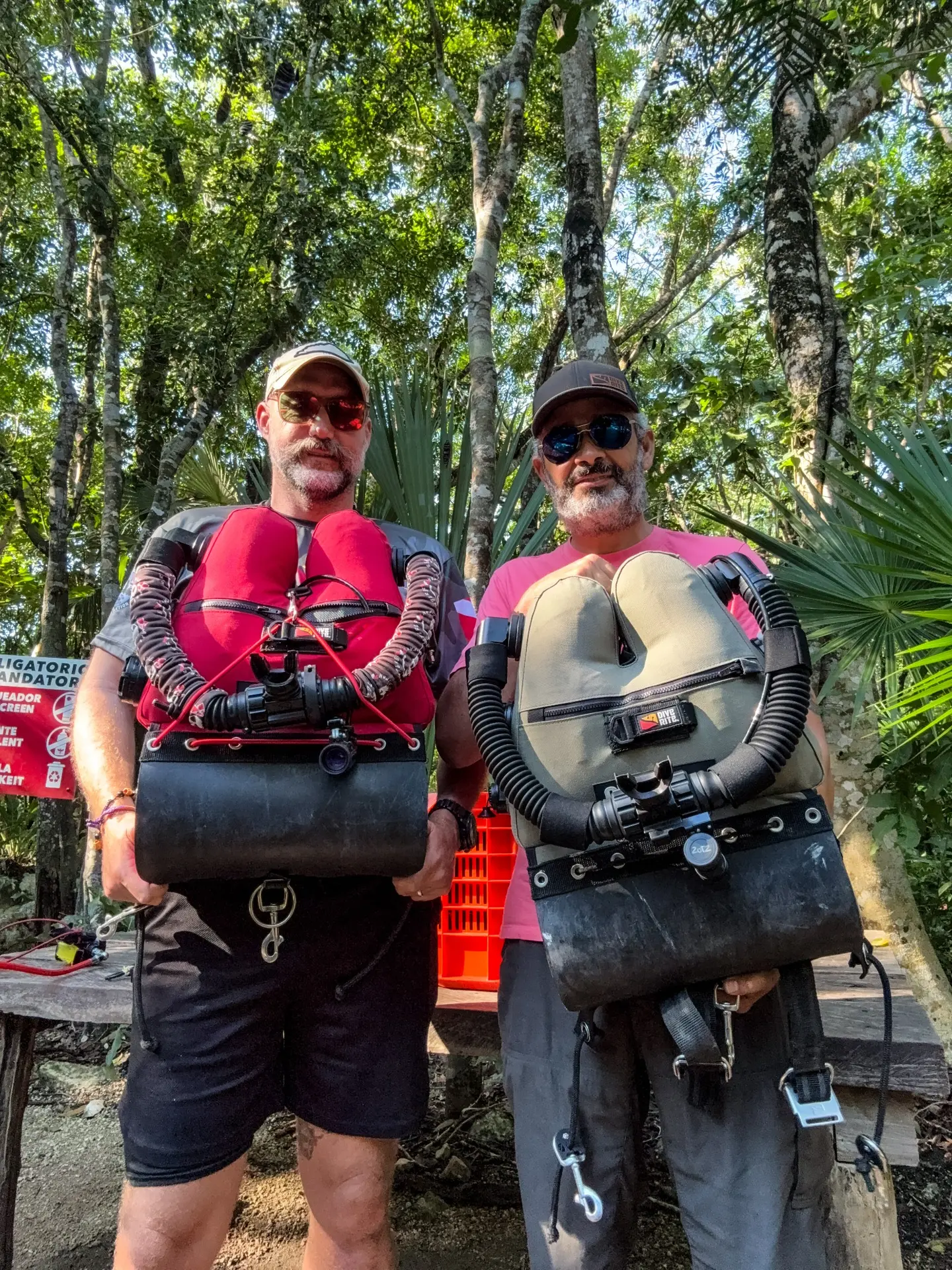
CCR diving requires precise buoyancy, trim, propulsion, awareness and disciplined preparation. Open each course to review its complete prerequisites, theory and in-water skills.
Air Diluent CCR Diver
The entry-level unit-specific certification for divers who want to use a closed-circuit rebreather with air diluent. Training addresses the benefits, hazards and correct procedures of CCR diving and develops foundational skills to a maximum depth of 30 metres / 100 feet. No decompression diving is permitted during this course.
Requirements
- Minimum age: 18.
- Proof of 20 logged open-water dives; for a unit crossover, 10 logged CCR dives within the previous 12 months.
- TDI Nitrox Diver certification or equivalent.
- For an approved sidemount rebreather: Sidemount Diver certification or equivalent, 10 logged sidemount dives and any manufacturer-specific requirements.
- Nitrox Diver and/or Advanced Nitrox Diver may be combined with this course.
Theory
- History and evolution of rebreathers.
- Comparison of open-circuit, closed-circuit and semi-closed-circuit rebreather systems.
- Practical mechanics of the unit-specific system.
- Gas physiology.
- Scrubber packing in accordance with the manufacturer’s recommendations.
- Electronic or manual system design and maintenance.
- Dive tables, dive computers and dive planning.
- Emergency procedures.
Skills
- Build the unit to the manufacturer’s specifications using its manual and build checklist.
- Complete pre-dive checks and verify diluent and oxygen-cylinder contents with an oxygen analyzer.
- Demonstrate correct pre-dive planning and emergency procedures.
- Use the BCD or suit and manage breathing-loop volume effectively for buoyancy control.
- Stop at 3–6 metres / 10–20 feet during descent for a leak and bubble check.
- Monitor PO₂, change setpoints and, where applicable, control the setpoint manually.
- Use and adjust heads-up displays and dive computers.
- Remove and replace the mask.
- Deploy a lift bag or delayed surface marker buoy and reel where relevant.
- Execute the dive within all predetermined limits and complete required safety or decompression stops.
- Maintain constant loop volume and validate oxygen cells using diluent and oxygen appropriately.
- Clean and perform diver-level maintenance on the unit after the dive.
5 daysUSD 380 per day
Air Diluent CCR Decompression Procedures
The second-level unit-specific certification for CCR divers using air diluent. The course develops the knowledge and practical procedures needed for formal decompression diving to a maximum depth of 40 metres / 130 feet.
Requirements
- Minimum age: 18.
- Proof of 50 logged dives; for a unit crossover, at least 10 logged CCR dives within the previous 12 months.
- TDI Advanced Nitrox Diver and Decompression Procedures Diver certifications, or equivalents recognized by TDI.
- For an approved sidemount rebreather: Sidemount Diver certification or equivalent, 10 logged sidemount dives and any manufacturer-specific requirements.
Theory
- History and evolution of rebreathers.
- Comparison of open-circuit, closed-circuit and semi-closed-circuit rebreather systems.
- Practical mechanics of the unit-specific system.
- Gas physiology.
- Scrubber packing in accordance with the manufacturer’s recommendations.
- Electronic or manual system design and maintenance.
- Dive tables, dive computers and dive planning.
- Emergency procedures.
Skills
- Build the unit to the manufacturer’s specifications using its manual and build checklist.
- Complete pre-dive checks and verify diluent and oxygen-cylinder contents with an oxygen analyzer.
- Demonstrate correct pre-dive planning and emergency procedures.
- Use the BCD or suit and manage breathing-loop volume effectively for buoyancy control.
- Stop at 3–6 metres / 10–20 feet during descent for a leak and bubble check.
- Monitor PO₂, change setpoints and, where applicable, control the setpoint manually.
- Use and adjust heads-up displays and dive computers.
- Remove and replace the mask.
- Deploy a lift bag or delayed surface marker buoy and reel where relevant.
- Execute the dive within all predetermined limits and complete required safety or decompression stops.
- Maintain constant loop volume and validate oxygen cells using diluent and oxygen appropriately.
- Clean and perform diver-level maintenance on the unit after the dive.
5 daysUSD 380 per day
Helitrox CCR Decompression Procedures
A second-level unit-specific CCR certification for mixed-gas diving with a helitrox diluent. Training develops the benefits, hazards and correct procedures required for formal decompression diving to a maximum of 45 metres / 150 feet. Diluent and bailout mixtures may contain no more than 35% helium, within ±5%, and no less than 21% oxygen; oxygen concentrations up to 100% may be used for decompression.
Requirements
- Minimum age: 18.
- Proof of 50 logged dives; for a unit crossover, 10 logged CCR dives within the previous 12 months.
- TDI Advanced Nitrox Diver and Decompression Procedures Diver, TDI Helitrox Diver, or an equivalent recognized by TDI.
- For an approved sidemount rebreather: Sidemount Diver certification or equivalent, 10 logged sidemount dives and any manufacturer-specific requirements.
Theory
- History and evolution of rebreathers.
- Comparison of open-circuit, closed-circuit and semi-closed-circuit rebreather systems.
- Practical mechanics of the unit-specific system.
- Gas physiology.
- Scrubber packing in accordance with the manufacturer’s recommendations.
- Electronic or manual system design and maintenance.
- Dive tables, dive computers and dive planning.
- Emergency procedures.
- Helium considerations.
Skills
- Build the unit to the manufacturer’s specifications using its manual and build checklist.
- Complete pre-dive checks and verify diluent and oxygen-cylinder contents with an oxygen analyzer.
- Demonstrate correct pre-dive planning and emergency procedures.
- Use the BCD or suit and manage breathing-loop volume effectively for buoyancy control.
- Stop at 3–6 metres / 10–20 feet during descent for a leak and bubble check.
- Monitor PO₂, change setpoints and, where applicable, control the setpoint manually.
- Use and adjust heads-up displays and dive computers.
- Remove and replace the mask.
- Deploy a lift bag or delayed surface marker buoy and reel where relevant.
- Execute the dive within all predetermined limits and complete required safety or decompression stops.
- Maintain constant loop volume and validate oxygen cells using diluent and oxygen appropriately.
- Clean and perform diver-level maintenance on the unit after the dive.
5 daysUSD 380 per day
Mixed Gas CCR Diver
The intermediate unit-specific certification for mixed-gas CCR diving. The program develops the benefits, hazards and procedures associated with a diluent containing 16% oxygen or more and builds the skills required for technical CCR diving to a maximum depth of 60 metres / 200 feet.
Requirements
- Minimum age: 18.
- A verified minimum of 50 rebreather hours across at least 50 dives on the specific unit. Qualifying dives must be deeper than 9 metres / 20 feet; at least 20 must be deeper than 30 metres / 100 feet and at least 10 must require staged decompression.
- A diver with 50 hours on another TDI-recognized CCR needs at least 25 hours and 25 dives on the course-specific unit.
- For a unit crossover, at least 10 logged CCR dives within the previous 12 months.
- TDI Air Diluent Decompression Procedures Rebreather or TDI CCR Helitrox Diluent Decompression Procedures certification, or an equivalent recognized by TDI.
Theory
- Gas physiology and formula work.
- Dive tables, dive computers and decompression on a CCR.
- Dive planning and the unit-specific checklist.
- Equipment maintenance and loop configuration.
- Additional fitted equipment and modifications.
- Emergency procedures.
Skills
- Build the unit to the manufacturer’s specifications and demonstrate command of basic and intermediate hand signals.
- Select and prepare equipment for a soft overhead environment with long decompression obligations.
- Conduct team-oriented lift-bag, bailout and buddy-rescue drills.
- Analyze every gas mixture, complete detailed dive planning, use the TDI pre-flight checklist and perform START before every dive.
- Apply stress analysis and mitigation while maintaining communication, proximity and team awareness.
- Maintain precise buoyancy and hover without moving hands or feet; remove and replace the mask and deploy a backup mask.
- Recover from a system failure and complete the dive and decompression using carried open-circuit gases.
- Connect, share and exchange off-board gas and bailout cylinders.
- Recover from system failure and complete the dive and decompression with the unit in manual mode.
- Respond to gas shutdowns, loss of gas, broken hoses, catastrophic failures, a flooded scrubber and cell errors.
- Complete a minimum ten-minute SCR drill and use oxygen-rebreather mode shallower than 6 metres / 20 feet.
- Manage two bailout cylinders, including drop and recovery while holding position in the water column.
- Deploy a DSMB at depth and in mid-water and respond to a simulated failed deployment.
- On two dives, ascend with an ascent reel and lift bag while completing staged decompression.
- Monitor PO₂, validate cells, remain within planned limits and hold decompression stops at predetermined depths.
- Conduct a controlled ascent with a simulated oxygen-toxicity casualty, tow the diver at least 50 metres / 165 feet and remove equipment at the surface in water too deep to stand.
7 daysUSD 380 per day
Advanced Mixed Gas CCR Diver
The highest level of unit-specific CCR training in this pathway. It develops the benefits, hazards and procedures of advanced mixed-gas diving and the skills required for dives to a maximum depth of 100 metres / 330 feet, or shallower where required by local law. A dry suit is mandatory.
Requirements
- Minimum age: 18.
- TDI CCR Mixed Gas Diluent Diver certification or an equivalent recognized by TDI.
- A verified minimum of 100 CCR hours across at least 100 dives, including at least 50 hours and 50 dives on the course-specific unit.
- At least 50% of the qualifying dives must be deeper than 30 metres / 100 feet, and at least 20 logged CCR dives must require staged decompression.
- All qualifying dives must be deeper than 9 metres / 20 feet.
Theory
- Gas physiology and formula work.
- Dive tables, dive computers and decompression on a CCR.
- Dive planning and the unit-specific checklist.
- Equipment maintenance and loop configuration.
- Additional fitted equipment and modifications.
- Emergency procedures.
Skills
- Build the unit to the manufacturer’s specifications and demonstrate command of basic and intermediate hand signals.
- Select and prepare equipment for a soft overhead environment with long decompression obligations.
- Conduct team-oriented lift-bag, bailout and buddy-rescue drills.
- Analyze every gas mixture, complete detailed dive planning, use the TDI pre-flight checklist and perform START before every dive.
- Apply stress analysis and mitigation while maintaining communication, proximity and team awareness.
- Maintain precise buoyancy and hover without moving hands or feet; remove and replace the mask and deploy a backup mask.
- Recover from a system failure and complete the dive and decompression using carried open-circuit gases.
- Connect, share and exchange off-board gas and bailout cylinders.
- Recover from system failure and complete the dive and decompression with the unit in manual mode.
- Respond to gas shutdowns, loss of gas, broken hoses, catastrophic failures, a flooded scrubber and cell errors.
- Complete a minimum ten-minute SCR drill and use oxygen-rebreather mode shallower than 6 metres / 20 feet.
- Manage two bailout cylinders, including drop and recovery while holding position in the water column.
- Deploy a DSMB at depth and in mid-water and respond to a simulated failed deployment.
- On two dives, ascend with an ascent reel and lift bag while completing staged decompression.
- Monitor PO₂, validate cells, remain within planned limits and hold decompression stops at predetermined depths.
- Conduct a controlled ascent with a simulated oxygen-toxicity casualty, tow the diver at least 50 metres / 165 feet and remove equipment at the surface in water too deep to stand.
7 daysUSD 380 per day